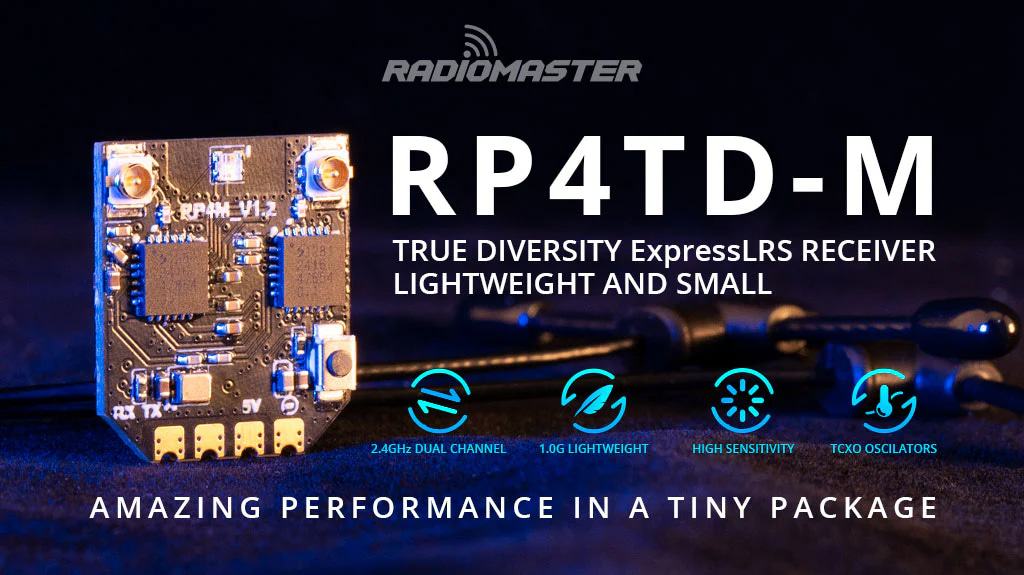
RadioMaster RP4TD-M ELRS 2.4GHz Mini True Diversity Receiver
- 2.4GHz 듀얼 채널 무선 기능의 ELRS용 미니 수신기입니다.
- 듀얼 TCXO적용으로 주파수 안정성이 뛰어납니다.
- 안정적인 DCDC 전원 공급 회로를 적용하였습니다.
- 동급 최고의 SNR 및 RSSI 성능을 보여줍니다.
- 모든 2.4GHz ExpressLRS 모듈에 사용가능합니다.
본 제품은 ELRS 전용 수신기 입니다.
4in1모듈이나 CC2500모듈에 사용하실 수 없습니다.
구성
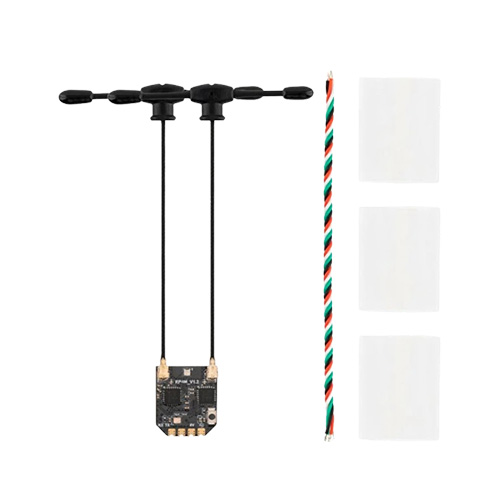
RP4TD-M 수신기 1개
T안테나 2개
메뉴얼
* 글로벌 펌웨어로 배송됩니다. KC 조종기에 사용하실 경우 KC 펌웨어로 업데이트가 필요합니다.
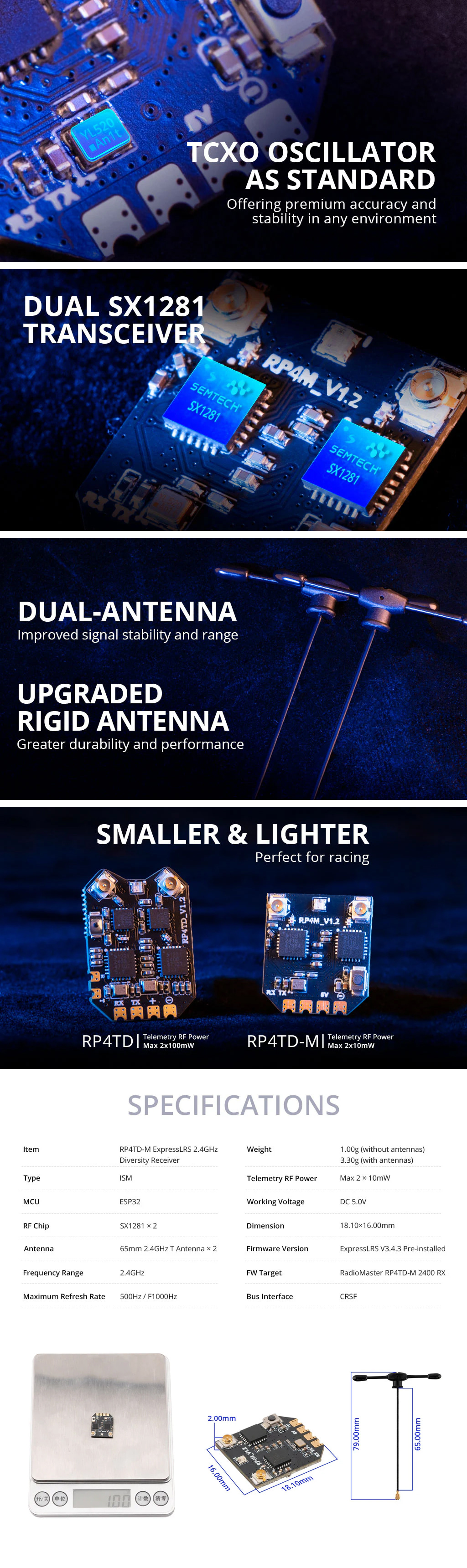
Introducing the Compact and Lightweight RP4TD-M! Building on the success of the RP4TD, we're excited to unveil the RP4TD-M—a compact and lightweight version designed for optimal performance. Weighing in at just 1 gram, this receiver is ideal for builds where minimizing weight is crucial, while still leveraging 'Gemini' technology for superior interference mitigation. Thanks to its optimized circuit design, the RP4TD-M features dual-channel 2.4GHz radios, delivering exceptional signal sensitivity, signal-to-noise ratio, and overall performance. Whether you're into racing drones or any application where every gram counts, the RP4TD-M stands out as a leader in its class. Features Mini size true diversity Gemini receiver Class leading SNR and RSSI performance Built-in TCXO (temperature compensated crystal oscillator) Optimized PCB design for better heat dissipation Upgraded antenna with greater durability and performance 2 x 10mW RF Telemetry power output Compatible with all 2.4GHz ExpressLRS modules and transmitters with built in 2.4GHz ExpressLRS Specifications Item: RP4TD-M ExpressLRS 2.4GHz Mini True Diversity Receiver Type: ISM MCU: ESP32 RF Chip: SX1281 x 2 Antenna: 65mm 2.4GHz T Antenna x 2 Frequency Range: 2.4GHz Maximum Refresh Rate: 500Hz / F1000Hz Telemetry RF Power: Max 2x 10mW Working Voltage: DC 5.0V Wifi Updates: Yes Weight: 1.00g [Without antennas] / 3.30g [With antennas] Dimension: 18.10 x 16.0mm Firmware Version: ExpressLRS V3.4.3 pre-installed FW Target: RadioMaster RP4TD-M 2400 RX Bus interface: CRSF
TCXO (temperature compensated crystal oscillator) The TCXO ensures high stability and accuracy in frequency control, compensating for temperature variations. This results in consistent and reliable signal reception, even in extreme temperature conditions. It also reduces frequency drift over time, providing long-term frequency stability and preventing signal degradation.



![알씨뱅크 HR7E [HelloRadioSky] HR7E 2.4G PWM 8채널 ELRS 수신기 2](https://www.rcbank.co.kr/shop/data/editor/efae618b1b455104.png)